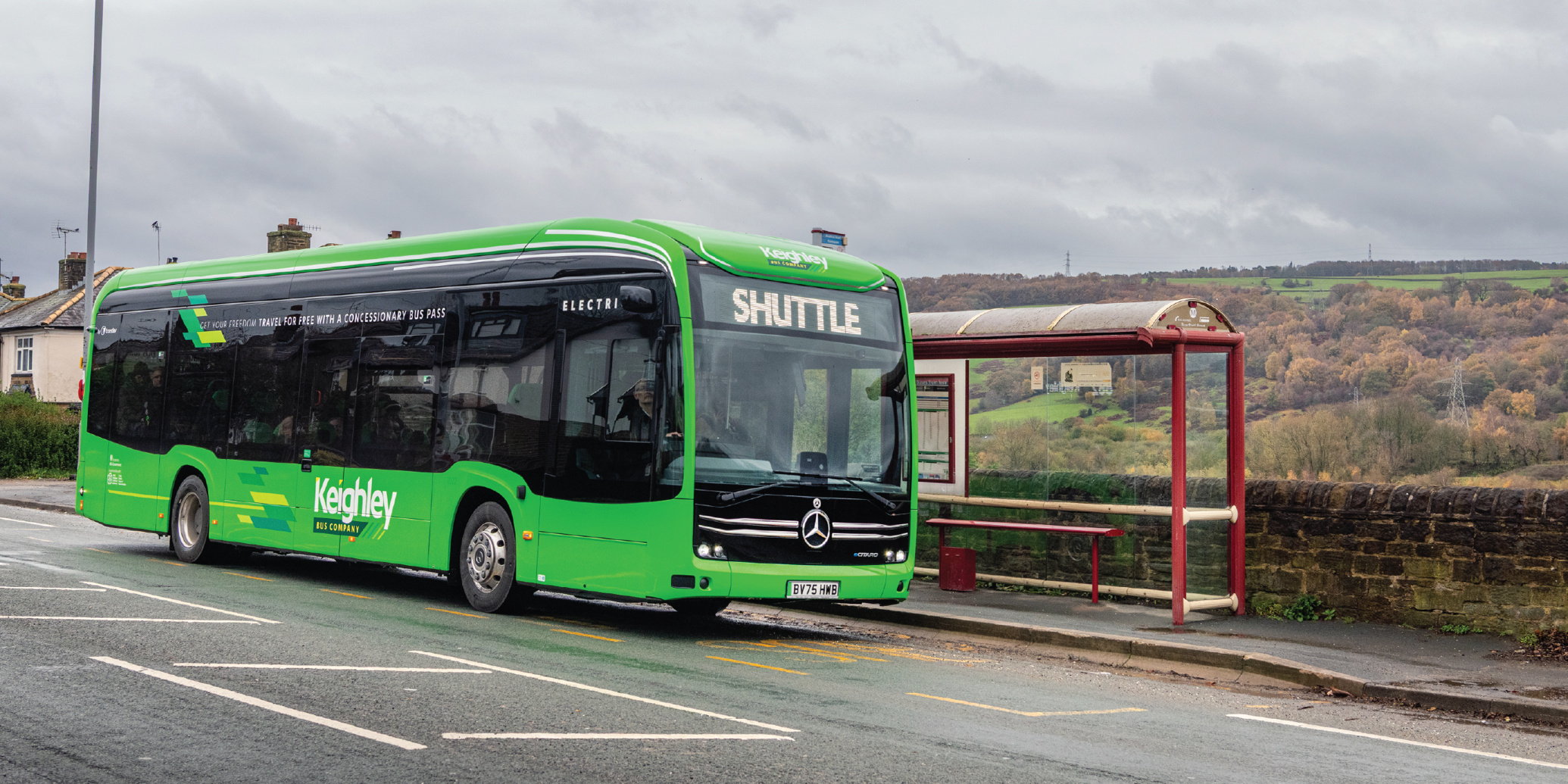
Transdev celebrates 5 million electric kilometres of sustainable transport
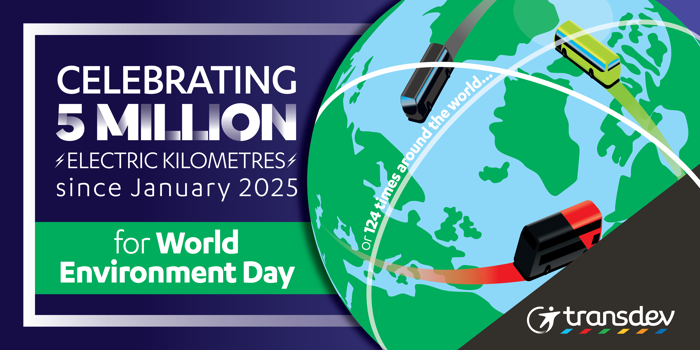
It’s World Environment Day on June 5, and we’re celebrating a new milestone in sustainability: 5 million total kilometres of electric bus travel, completed across our Yorkshire network.
Transdev is committed to creating environmentally friendly transport options across the North of England, chief of which is the integration of all-electric buses and the infrastructure needed to support them.

Roll on 5 million electric kilometres
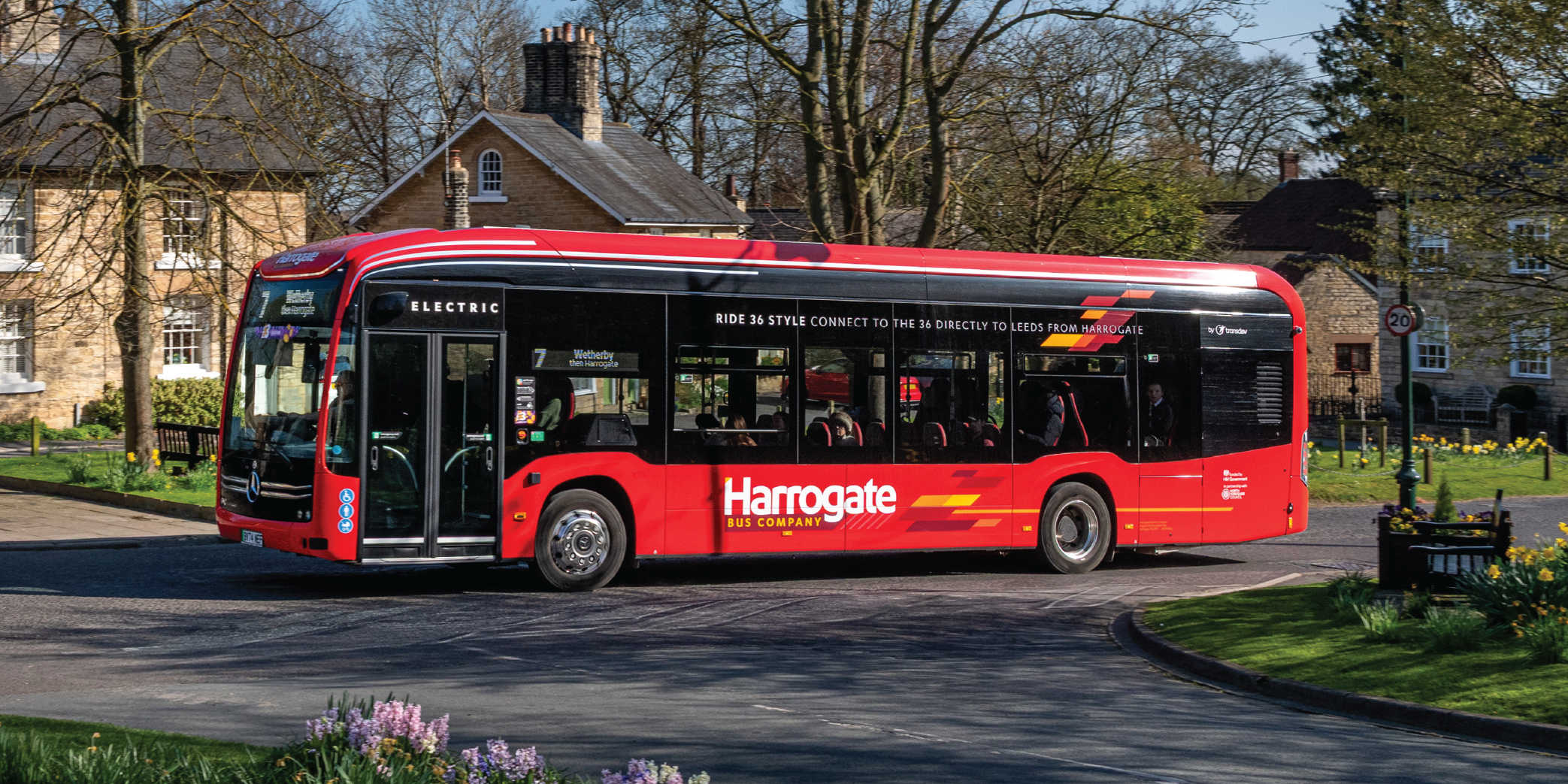
Starting in 2024, the first of 39 battery-powered buses worth £21 million were delivered to the Harrogate Bus Company, with another 15 electric vehicles worth £6.6 million arrived in Keighley this past November.
These modern single and double-decker buses not only include the latest customer comfort, accessibility, and safety features as standard, but they’ve already saved us thousands of tonnes of CO2.
By late-June 2026, Transdev will have completed an incredible 5 million electric kilometres of sustainable transport – that’s the same distance as circling the Earth about 124 times!
Over 4 million of these electric kilometres have come solely from Harrogate’s eCitaro and Alexander Dennis fleets, the rest from Keighley’s bright-green Mercedes-Benz eCitaros.
For Harrogate specifically, more than 5,200 tonnes of CO2 are now being saved every year, which is approximately the same as:
- The electricity needed to power 1000 homes for one year
- Driving 13 million miles in an average petrol-powered car
- The annual carbon footprint of over 420 people
- Charging a smartphone over 330 million times
This includes 2,000 tonnes from Harrogate’s flagship service, The 36 – and that’s before any of these single or double-decker buses even carry any passengers.
By comparison, Keighley’s fleet of 15 eCitaros is on course to save (as estimated for a full year of service) approximately 1,430 tonnes of CO2, which is the equivalent of:
- The electricity needed to power almost 270 homes for one year
- Driving 3.5 million miles in an average petrol-powered car
- The annual carbon footprint of around 115 people
- Charging a smartphone over 88 million times
Behind the scenes, the voltage required to charge each of these next-generation batteries also comes from renewable energy sources, i.e., wind farms in Scotland.
Transdev Blazefield Managing Director, Henri Rohard, said:
“As one of the first bus operators in the North of England to invest in innovative, sustainable, all-electric operations, we are delighted to be hitting such an important milestone so close to World Environment Day.
“To capture the carbon equivalent of over 80,000 trees, enough to cover eight football pitches, is a fantastic achievement – particularly for our drivers and engineering colleagues whose dedicated work has helped make this happen.”